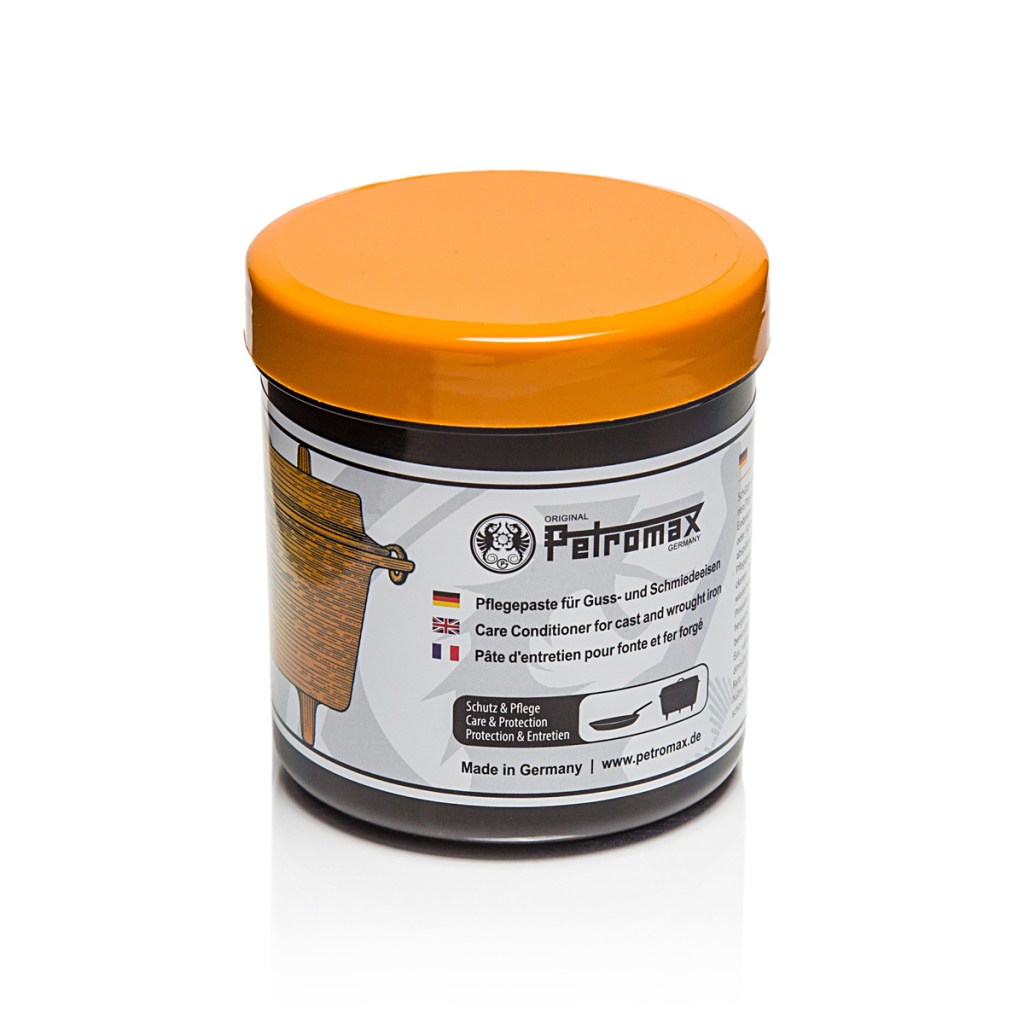
Many new Dutch ovens now come ready seasoned from the manufacturer but if you are not sure whether or not this is the case, it won’t hurt to go through this process. You will also need to periodically re-season your Dutch oven through out its life and certainly if it gets rusty or develops mould then you will need to re-season it once you have cleaned it back to bare metal. If in doubt do it anyway.
Any food grade oil or fat can be used for seasoning but if your cast iron is not in regular use some like lard, tallow and normal vegetable oil can go rancid with time. Other oils can get brittle with age and the seasoning may start to crack and flake off after a while. Many companies that manufacturer cast iron cookware (Lodge, Petromax, etc.) manufacturer their own seasoning oil but if you don’t want to use them then avocado and grapeseed oil are the ones to go for. Both have a high smoke point and don’t oxidise and go rancid too quickly.
To season you Dutch oven, start by washing it thoroughly with warm water. If it has not been pre-seasoned or you have cleaned it back to bare metal, you can use a mild soap but if it is pre -seasoned or you are re-seasoning then do not use any soap or detergent. Dry it completely the apply a thin, even layer of seasoning oil to the entire surface, including the lid and handles. Wipe off any excess oil to avoid a sticky finish. Place the Dutch oven upside down in an oven preheated to 375°F (190°C) with a foil-lined bottom to catch any drips. Bake for 1-2 hours, then let it cool completely. If outdoors heat on a medium heat on your fire or stove. Ideally, repeat this process a few times to develop a well-seasoned, non-stick surface.
Regular use and proper cleaning will help maintain the seasoning.
 Fire, Ferment and Smoke